Banking on Equality: Women, work and employment in the banking sector in India
One of the first books to provide an in-depth analysis of women’s employment in the banking sector in India
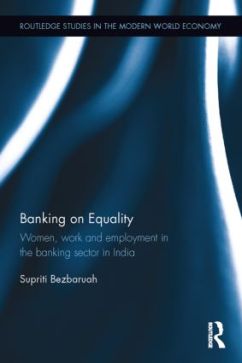
It may well be surprising to say that the world should look to India as a model of gender equality. India’s banking sector proves the exception, with several women reaching the highest positions in India’s top banks, including the country’s largest bank.
Based on interviews and surveys of bank employees in India’s National Capital Region, this book looks beyond the media rhetoric and provides a systematic analysis of gender inequality in the banking sector in India. The book uncovers how gender discrimination still persists in the banking sector, albeit in covert forms. Through a comparison of nationalized, Indian private and foreign banks, the book demonstrates how the impact of laws, local cultural norms and gendered workplace practices are mediated through different organizational forms in these different types of banks to create varied experiences of gender inequality.
The book is one of the first books to provide a thorough, in-depth analysis of women’s employment in the Indian banking sector, currently an under-researched area.
Gender Equality and Women’s Employment in the Banking Sector in India
Book chapter in “Women Workers in Urban India” edited by Saraswati Raju and Santosh Jatrana
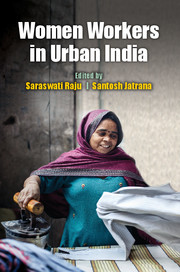
This volume examines the role of women workers who are joining the workforce in urban India. Employment opportunities have opened up and are constantly expanding for women, but this book interrogates whether their working status is breaking gender stereotypes or reaffirming them. It argues that whether women are working in offices or from home, contributing to the IT sector or labouring as petty producers, they are unable to break out of the gendered codes that place them at the lower rungs of the occupational ladder. More importantly, the hierarchical social order, comprising caste, class and ethnic identities, seems to echo in the gendered structure of the labour market as well. This volume studies the intertwining of work with embedded patriarchal notions of women’s places in designated spheres, and the overt and covert processes of resistance that women offer in defining new roles and old ones anew.
Gender Equality At Work: A Singaporean Success Story?
Article examining the progress made by Singaporean woman

Singapore ranks third among developed markets in Asia-Pacific for overall gender equality, behind Australia and New Zealand, but ahead of other developed economies in Asia such as Hong Kong, Taiwan, South Korea and Japan. In particular, Singapore offers more opportunities for women’s leadership among other developed Asian countries. Not surprisingly, therefore, there are arising number of women leaders and business owners here.
This article examines the progress made by Singaporean women towards gender equality, but also highlights areas where there is still room for improvement. For the full text of this article, read the full story at Executivelifestyle.sg
Putting gender on the agenda for sustainability reporting: some thoughts
Article discussing the main aspects of gender reporting under the Global Reporting Initiatives (GRI) G4 guidelines
Governments around the world are increasingly asking companies to provide sustainaibility reports, including gender reporting. This article discusses some of the gender related indicators included in the Global Reporting Initiative’s G4 guidelines, one of the most widely used reporting guidelines. The article also includes a checklist for companies to follow for gender reporting. To read the full article, visit the Paia Consulting website.
Adolescents in India: A Profile
A review of the status of adolescents in India
Commissioned by the United Nations Population Fund (UNFPA), this report provides data on the situation of adolescents in India, from demographic indicators to nutrition, health and education status. It also provides a detailed overview of UN programmes, government policies and NGO programmes and activities targeted at adolescents. It highlights the major concerns relating to adolescents, gaps in current policy and suggests directions for future interventions.
For Women to Lead . . . Ideas and Experiences from Asia – a Study on Legal and Political Impediments to Gender Equality in Governance
Co-authored with Ms Devaki Jain, study provides an overview of different experiences of governance in Asia
Sponsored by the United Nations Development Fund (UNDP), and published by the National Commission for Women, this study, through the examples of case studies from China, Philippines and India examines the legal and political impediments to gender equality in governance. It suggests ways to make governance, particularly local governance more inclusive of women, and provides recommendations for changes towards gender equality, including regional cooperation and the development of gender indicators.
 E W C
E W C 